

Everyone entering a red-ocean category faces the same problem. You can’t out-feature incumbents who have spent years building to customer requests, and you can’t outspend them.
Today, we’re looking at how Attio, a London-based CRM startup, turned one of SaaS’s most crowded categories into fertile ground.
Where others chased features and integrations, Attio reframed what a CRM feels like to use. And in doing so, built a loyal early-adopter base by design.
Journey Before the AHA Moment
CRMs were supposed to organise relationships. Instead, they buried them.
Most were defined by:
1. Clunky interfaces
2. Rigid data models
3. Painful integrations
4. Countless hidden costs
So the founders built Fundstack, a vertical CRM for one Ideal Customer Profile: investors managing deal flow, portfolios, LPs, and compliance.
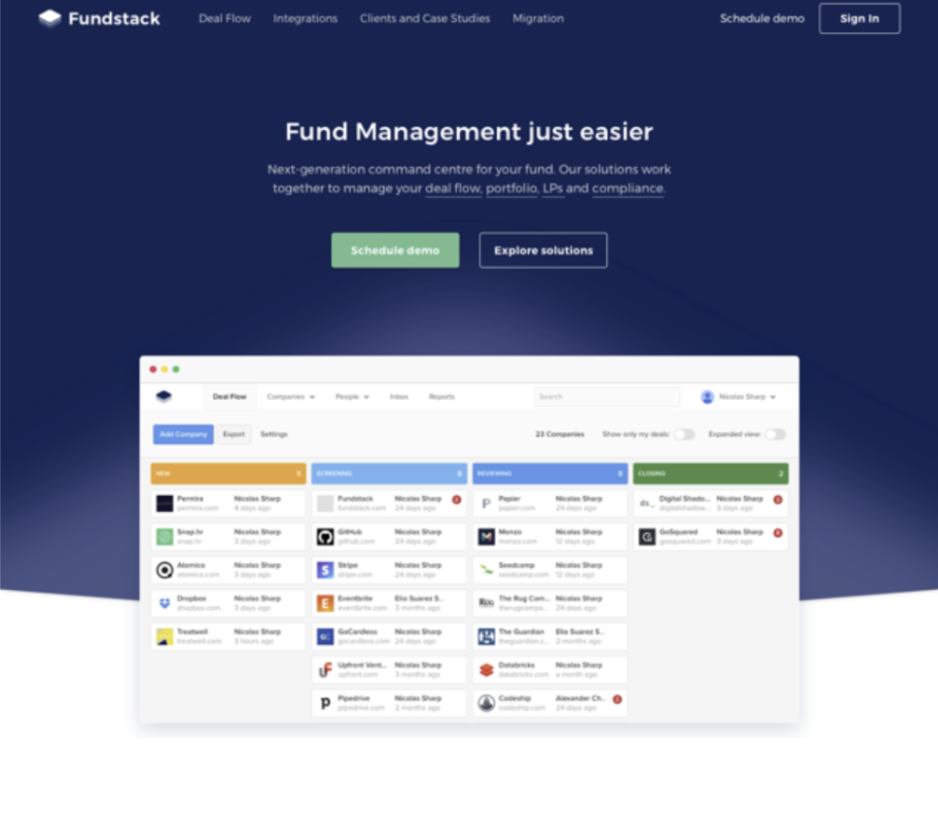
Fundstack gained traction, but when the team tried to expand beyond venture use cases, they hit a wall. Every design decision, from data schema to even the name locked them into that narrow segment.
To reach new markets, they had to start over. And they did.
They realised the real problem wasn’t what CRM did, but how it made people feel when using it. Instead of chasing integrations or templates, they rebuilt the concept itself.
A CRM that feels like a workspace, not a system. Where incumbents enforce process and control, Attio enables flow and agency.
How They Rebuilt the Product
Attio positions itself as “a CRM that works like a workspace.”
Its interface mirrors Notion and Airtable:
1. Modular tables
2. Flexible schema
3. Collaborative editing
4. Custom views
As the founders put it, they’re rebuilding CRM from first principles to make it flexible, beautiful, and collaborative.

Notion

Attio – unmistakably workspace DNA
They moved away from “system-of-record” language and positioning. You won’t find “sales pipeline” or “reporting dashboard” in their UI. Instead: collections, entries, and views.
| Legacy CRM | Attio |
|---|---|
| Pipelines → rigid, extractive, finite | Workspaces → modular, composable, living |
| Manager-centric → built for reporting up | Operator-centric → built for doing the work |
| Cluttered UI → information overwhelm | Calm UI → visual clarity and agency |
Proof That The New Product Worked
Early Product Hunt reviews showed a consistent theme. Attio’s first power users were builders – founders, operators, freelancers, chiefs of staff.

Reviews included:
1. “Like a hybrid between Notion and Airtable rolled into a CRM.”
2. “Perfect for startups, aesthetically pleasing.”
3. “A game changer for freelancers.”
No one talked about sales quotas or pipeline reports. They talked about flexibility, beauty, and control.
That emotional inversion from control to creativity became their moat.

That’s one of the reasons Attio acquired 1,000 paying customers within a year of launching.
Product Built for the AI Era
Under the hood, Attio’s workspace metaphor isn’t just aesthetic. It’s architectural.
The product is built around an AI-native data model that can understand unstructured signals like emails, calls, and notes without manual entry.
This isn’t a separate AI layer tacked on later. It’s the foundation that allows the CRM to observe relationships in motion.
It’s what makes the promise of a flexible, living workspace technically possible.
The Strategy Behind It
Language isn’t cosmetic. It defines the mental model of your category.
When Attio replaced “pipeline” with “collection,” it swapped a transactional metaphor for a creative one.
This small shift cascaded through:
1. Who adopts it → founders, recruiters, operators with builder DNA
2. How they use it → collaboration and prototyping, not data entry
3. What they tell others → “a CRM you actually want to open”
In crowded markets, semantics often do more positioning work than features.
Tactic: Run a Category Reframing Audit
If you’re building in a saturated space, borrow Attio’s playbook.
1. Language Audit
Highlight every word your competitors use. Replace one with a phrase that conveys flow or flexibility.
Examples:
“Pipeline automation” → “Workflows that evolve with you.”
“Reporting dashboards” → “Shared views that tell the real story.”
2. Visual Audit
Place your homepage beside your top two competitors.
Ask: Which one looks like progress? If yours feels like an intranet, you’re selling the past.
3. Emotional Audit
Every category sells an emotion.
Salesforce = Authority
HubSpot = Confidence
Attio = Creativity
Pick yours.
What This Means for Product Teams in 2026
Attio didn’t win by adding more. They won by reframing the category. The lesson is straightforward. In mature markets, advantage comes from how the product thinks, not how many features sit in the sidebar.
Rigid semantics, legacy workflows and UI debt are the hidden reasons products fail to scale.
Teams keep layering features on top of a mental model that no longer fits how people work.
The companies that break out are the ones that rethink the fundamentals:
1. The language users interact with
2. The mental model that shapes behaviour
3. The architecture that supports flexibility, not constraint
4. The UX patterns that communicate clarity, not complexity
How We Apply This at Software Co
When we build or rebuild products, we treat semantics, UX structure and data architecture as strategic levers, not aesthetics.
A system feels intuitive only when the language, the workflow and the underlying model align.
For clients operating in crowded or legacy-heavy categories, this approach often creates the breakthrough:
1. Reframing the product so it feels modern
2. Simplifying the mental load for operators
3. Designing workflows around how people actually behave
4. Building AI-native architecture so the system evolves with the organisation
This is the difference between shipping software and building a product people want to adopt.
If you want to explore what this looks like for your category or product, have a chat with us. We’ll help you rebuild the narrative, the UX and the system so it actually moves the business forward.
FAQ
What makes this analysis relevant for my product team
Most teams are fighting feature parity instead of reframing the category they operate in. This breakdown shows how language, UX and architecture act as strategic levers in crowded markets. If you’re stuck on incremental improvements, this gives you a different lens.
Why focus so much on semantics
Because semantics shape behaviour. Change the words and you change the mental model. Most legacy categories are trapped by their own vocabulary. A small shift often unlocks a different user base and new use cases.
How does category reframing differ from positioning
Positioning tells people what you are. Reframing changes what the category itself means. One is competitive. The other is structural.
Is this approach only for early stage products
No. Legacy products benefit the most. They carry the most UI debt, workflow debt and semantic baggage. Reframing gives them a way to reset how users perceive and interact with the system.
Where does AI fit into this
AI-native architecture only works when the data model and workflows are flexible enough to support it. If your system is rigid, AI becomes a bolt on. If your system is built for fluidity, AI becomes the engine.
What should I audit first
Start with language. It is the cheapest lever and reveals where your product’s mental model is misaligned with how people work today. Then look at workflows and architecture. UI should come last.
How do I know if my category is ready to be reframed
If every competitor sounds the same, looks the same and ships the same features, the market is ripe. Saturation signals opportunity.
How do we apply this at Software Co
We rebuild products from the foundation. That means aligning semantics, workflow design and an AI-ready data layer. The outcome is simple. A product that feels modern and reduces cognitive load.
What outcomes can I expect
Clearer positioning, faster onboarding, better adoption and a product narrative that resonates with operators rather than managers.